
Drawquarium Breeding Guide: Pairs, Babies and Growth
How breeding works in Drawquarium: relationships, healthy pairs, baby fish, tank space, and the parts the developer has not explained yet.
Breeding is one of the systems that changed most between the May demo and the release build. The September update confirms that fish can form relationships, produce babies, and that the babies grow. It does not publish a genetics table, a gestation timer, or a compatibility chart. This guide covers the parts that are confirmed, the setup that gives breeding the best chance, and the questions that will only be answered after launch.
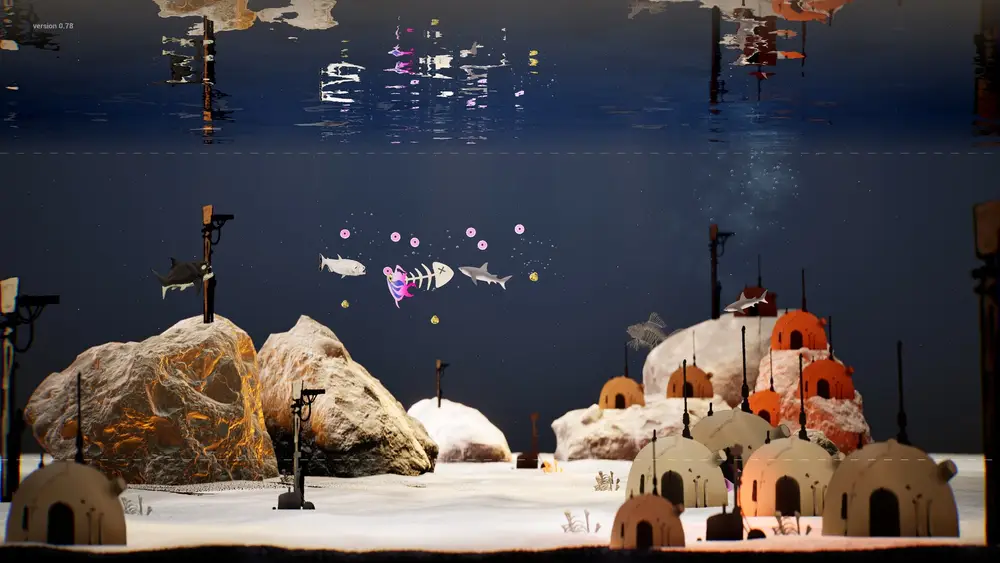
Growth and leveling feed into breeding, so the fish levels guide→ is the companion read.
What is confirmed
- Fish form friendships, rivalries, and romances.
- Breeding produces baby fish.
- Baby fish grow into adults.
- Relationships are visible through the heart action on the fish card.
- Fish can be moved between tanks.
That is enough to build a breeding tank. Everything else in this guide is a practice recommendation, clearly separated from confirmed mechanics.
Step 1: Raise two healthy adults
Breeding starts with condition, not with a button. A fish that is hungry, newly moved, or living in a dirty tank is a bad candidate. Pick two fish that have been in the same tank for a while, are eating reliably, and have a few days of age on their cards.
Level is a useful signal but not a requirement that the game publishes. A pair at level 10 with a stable routine is a better bet than two level 30 fish that were just moved.
Step 2: Give them space and cover
A breeding tank should have open water for swimming and planted areas for retreat. The September post says fish react to new fish and environment changes, and that they can get scared. A bare tank with two fish and no cover is a stressful setup.
Add the pair to the tank before you add decorations, then add decor slowly. If either fish stops eating, pause and let the tank settle.
Step 3: Watch the relationship state
The heart button on the fish card opens the relationship view. The store page describes friendships, rivalries, and romance, so the state is not binary. You want romance, not tolerate-each-other.
If the pair fights, separate them. The game allows moving fish between tanks, and a rivalry is not a path to babies. Try a different pair rather than forcing it.
Step 4: Keep the routine boring
Feed small portions, vacuum leftovers, collect scales, and avoid rearranging the tank. Breeding is the one system where excitement works against you. A stable tank with a predictable routine is the best environment for a pair to settle.
Do not add a third fish to a breeding tank unless you have space for a second tank. A third fish can disrupt the pair and complicate the relationship view.
Step 5: Expect babies, then protect them
When babies appear, the tank has a new problem: small fish in a big tank. Baby fish are harder to see, eat smaller food, and can be pushed around by adults. Move adults out if the babies are being chased, or move the babies to a grow-out tank if you have one.
The September update says babies grow, so the goal is a stable grow-out space rather than a permanent nursery. Keep the water clean and the food small.
What is not confirmed
The following details are unpublished as of November 8, 2026:
- Whether breeding requires a specific level, age, or relationship score.
- Whether genetics inherit color, shape, or behavior from parents.
- How long gestation takes, or whether there is a gestation period at all.
- Whether babies can be named at birth or only after growth.
- Whether inbreeding has any effect.
Any guide that states these as facts is guessing. The honest answer is that the system exists, the inputs are care and relationships, and the exact rules will be known after launch.
Keep a breeding log in the in-game journal. Note the parents, the date, and what the babies look like. If genetics do matter, your notes become the only reliable record you have.
Official source: Drawquarium store page ↗ and the September update post ↗, rokaplay ↗ and the Drawquarium Discord ↗
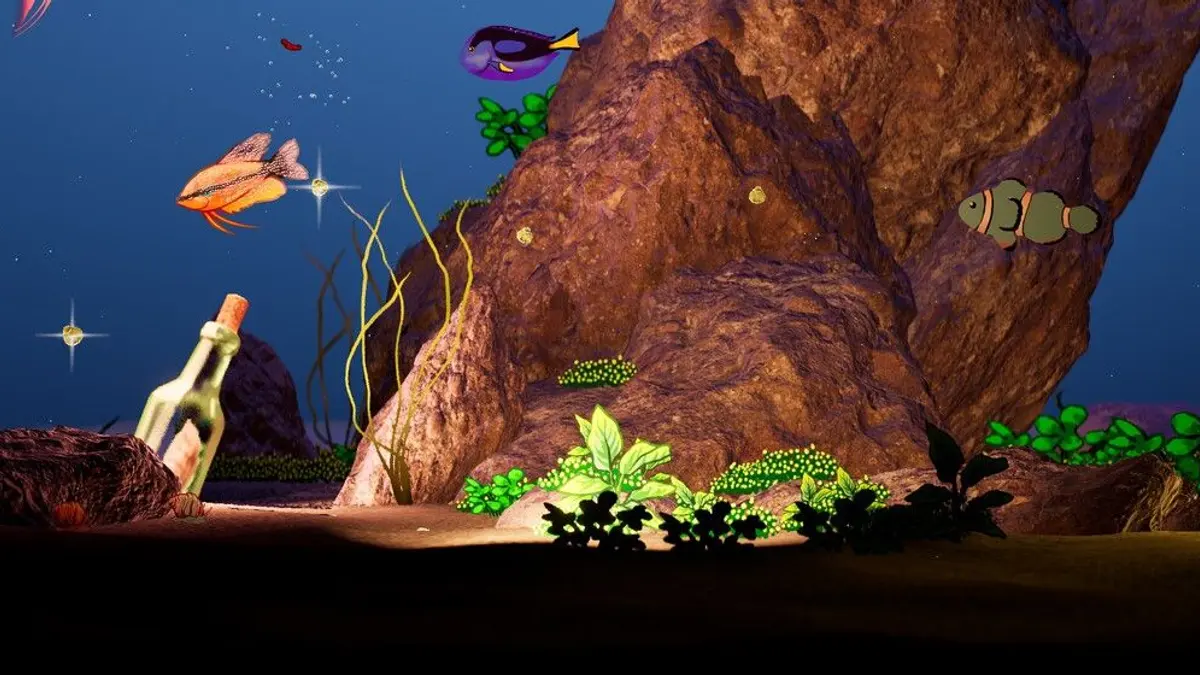
A simple breeding setup
Use one tank with:
- Two adult fish you have kept for at least a few days.
- One bottom feeder to handle leftovers.
- Moderate planting on one side, open water on the other.
- A background that makes small fish visible.
Avoid a crowded tank. Avoid a tank with a large predator. Avoid moving fish in and out during the pairing period. Once babies appear, decide whether the adults stay or move before you add anything else.
Should you breed at all?
Breeding is optional. It adds fish, which adds hunger rings and relationships, which adds maintenance. If you play Drawquarium for the drawing and the wallpaper, a tank of two or three hand-drawn fish is a complete experience.
Breed if you want a legacy tank: fish that share a look, a family history, and a place in your wallpaper. That is the emotional payoff the system is built for.
FAQ
Can any two fish breed?
The store page does not restrict breeding by species or template. It describes romance and babies without a compatibility table. The practical restriction is relationship state, not species.
Do babies inherit their parents' colors?
Not documented. The September post says babies grow, but it does not describe inheritance. Assume no inheritance until you observe it.
Can I breed fish from different tanks?
Fish can be moved between tanks, so put the pair in the same tank first. Breeding across tanks is not described.
What do baby fish eat?
Small food. The food editor lets you draw small pieces, and babies are smaller than adults. Keep portions tiny and vacuum often.
More Drawquarium Guides
A Drawquarium fish list built from official screenshots and patch notes: body templates, bottom feeders, jellyfish, sharks, and golden fish.
Use Drawquarium as a focus companion: the clock, timer, journal, checklist, and wallpaper mode, plus a simple work session setup.
How the Drawquarium food editor works, which shapes to draw, how portion size affects leftovers, and why bottom feeders still need the vacuum.
A practical Drawquarium guide for the first hour: draw a fish that reads well, feed it, finish early goals, and unlock your first upgrades.
Where Drawquarium runs: Windows PC requirements, Mac and Linux answers, Steam Deck compatibility, mobile, and console availability.
Drawquarium's price has not been announced. What is confirmed, how regional pricing works, whether it is free, and how to avoid overpaying.
Drawquarium launches on November 13, 2026 for Windows on Steam. What is confirmed about the release, the trailer, wishlists, and launch day.
How the Drawquarium template grid works: fish, eyes, fins, and food categories, Golden Scale unlocks, custom templates, and saved palettes.